
Email-to-SMS Spam in Africa.
Email-to-SMS Spam in Africa: Understanding T-Mobile Gateway Abuse, Spoofing, and “Live Number” Tests.


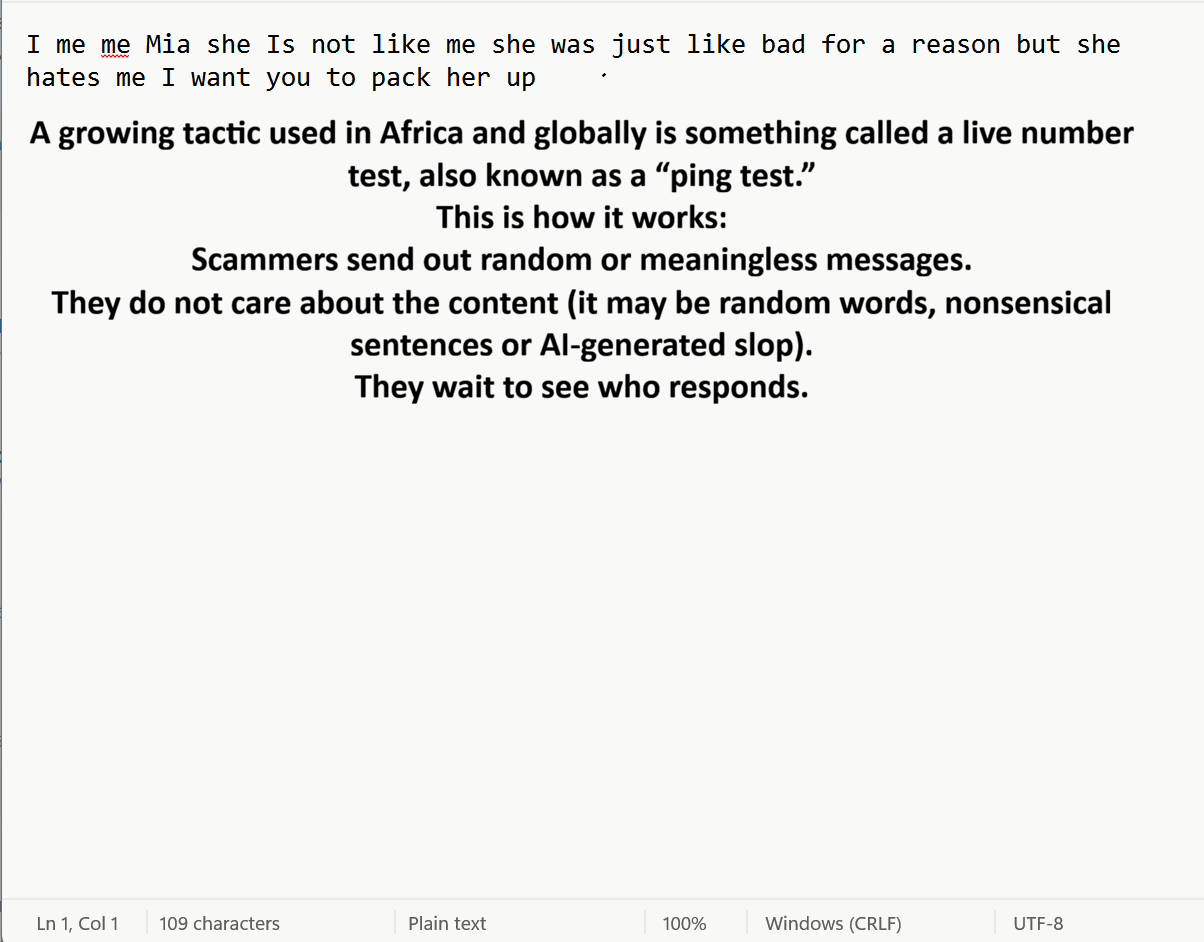
Recently, users in South Africa have started seeing a new type of spam that looks unusual and confusing: emails turning into SMS messages, often coming from addresses for example [+14699370180@tmomail.net](mailto:+14699370180@tmomail.net). This is not a normal text message scam. It is part of a system called an email-to-SMS gateway, and it is being abused by scammers in new ways.
This blog explains, in simple terms, how the system works, why it is being used for spam, and what “ping” or “live number” tests mean.
What is an email-to-SMS gateway?
Some mobile networks, including large international operators like T-Mobile US, offer a service that allows emails to be sent directly to phone numbers as SMS messages. An email-to-SMS gateway converts an email sent to a special address (for example 1234567890@tmomail.net) into a text message delivered to the corresponding phone number. These gateways were originally intended for alerts and system notifications.
How does email-to-SMS gateway work?
Every phone number can be linked to an email-style address. For example: [1234567890@tmomail.net](mailto:1234567890@tmomail.net).
When someone sends an email to that address, the system converts it into a text message.
The message is then delivered to the mobile phone linked to that number. Originally, this was designed for convenience, business alerts, notifications, or system messages sent directly to phones without needing SMS software. No special app is required on the recipient side; the message appears in the SMS inbox.
How scammers abuse the email-to-SMS gateway system?
Scammers quickly discovered that these email-to-SMS gateways can be misused. Instead of sending normal emails, they: Send thousands of automated messages to random phone numbers.
Use fake or unrelated email sender addresses.
Push spam directly into SMS inboxes, bypassing email spam filters.
This is why messages may look like they are coming from strange addresses such as: [+14699370180@tmomail.net](mailto:+14699370180@tmomail.net), random or suspicious or malformed email domain and spoofed business or personal names.
The key problem is that SMS feels more “trusted” than email. People are more likely to open a text message, which makes this method attractive to scammers.
What is email spoofing and how does it enable this scam?
Email spoofing is when the attacker forges the visible “From” address. Modern defences, SPF, DKIM, and DMARC, exist to verify senders, but not all domains enforce them correctly, and spoofing remains possible where authentication or alignment is missing.
Another trick used in these attacks is email spoofing. Email Spoofing means is when the scammer forges the “From” address you see, while the real sender is hidden behind the scenes, moreover the message looks like it came from a different person or company. This happens because older internet email systems were designed without strong identity verification.
So even if you see something like: [support@company.com](mailto:support@company.com) or a random domain name, it does not always mean that is the real sender. Modern protections like SPF, DKIM, and DMARC exist, but not all domains enforce them.
What are “Ping” or “Live Number” tests and how does it work?
A growing tactic used in Africa and globally is something called a live number test, also known as a “ping test.”
This is how it works: Scammers send out random or meaningless messages.
They do not care about the content (it may be random words, nonsensical sentences or AI-generated slop).
They wait to see who responds. If you reply, even just “Who is this?” you confirm that your number is active, a real person is reading messages and you may be targeted again or sold to other spam networks. This is why the message content often looks strange, emotional, or nonsensical. It is not meant to make sense. It is designed to trigger a reaction.
Why this is appearing in South Africa now?
South Africa is increasingly connected to global telecom and messaging systems. That means that international spam systems can reach local numbers as SMS remains widely used for communication.
Users may not always recognise foreign gateway formats like tmomail.net. This creates a gap that scammers exploit quickly when new routes appear.
What you should do if you receive spam email-to-SMS messages?
Do NOT reply.
Do NOT click links (if any appear).
Block the sender immediately.
Delete the message.
Report it if your mobile provider offers reporting tools.
Most importantly, treat strange or emotional messages as suspicious, even if they look personal.
Email-to-SMS gateways were created to make communication easier, but they also created a new attack surface for scammers. Combined with spoofing and “live number” testing, these systems are now being used to filter active phone numbers and spread spam more effectively. Awareness is the strongest defence and once you understand that these messages are automated tests, not real conversations, they lose their power to confuse or mislead.
Stop, pause evaluate.
What I Do.
I specialise in Digital Footprints for new Startups and Identities struggling to be found in Search.

Google Maps Marketing Local SEO
Google Maps Marketing Local SEO is the art of optimising your online presence and increasing foot traffic to your local based business.

SEO Content Copywriting
SEO Digital Content Copywriting is the art of copywriting keyword/phrase content that is found in search results that converts.

Search Engine Marketing SEM
Search Engine Marketing SEM is a paid advertising strategy, like pay-per-click (PPC) increasing website visibility to appear as search results in Search Engine Results Pages SERPs.

WordPress Websites
WordPress is an open-source versatile content management system CMS for users to create easy functional beautiful looking websites that is found in search

WordPress SEO
WordPress SEO is the art of of getting your WordPress Website Pages on #Page1 of Organic Search Results for your Keywords/Phrases/Products/Services to your (best converting) target audience.

WordPress Website Maintenance
WordPress Website Maintenance is the process of keeping your website functioning properly, fast, secure, backed-up, up-to-date and in line with best practices that supports your SEO strategy.

Photography
Photography is the art of capturing an instant in time by recording the light you see and applying a filter of your innermost thoughts.

360° Virtual Reality Video
Let's Work Together!
Contact SEO Cape Town.
5 Clarendon Court, Melrose Road, Muizenberg, Western Cape 7945, South Africa VFR9+XP Lakeside, Cape Town
(+27) 060 904 5988
Email Me
Follow Us

First Peoples Land Statement
Search Engine Optimisation Marketing operates on the traditional, ancestral and unceded lands of the San and Khoe peoples. I wish to acknowledge the lands of the First Peoples we now occupy.